“Narratives shape how we understand conflict and how we imagine peace. They influence whose voices are heard, whose experiences are recognised and what possibilities exist for dialogue before conflict hardens into violence.”
– H.E. Penny Wong, Australia’s Minister for Foreign Affairs, in her opening message to the Forum
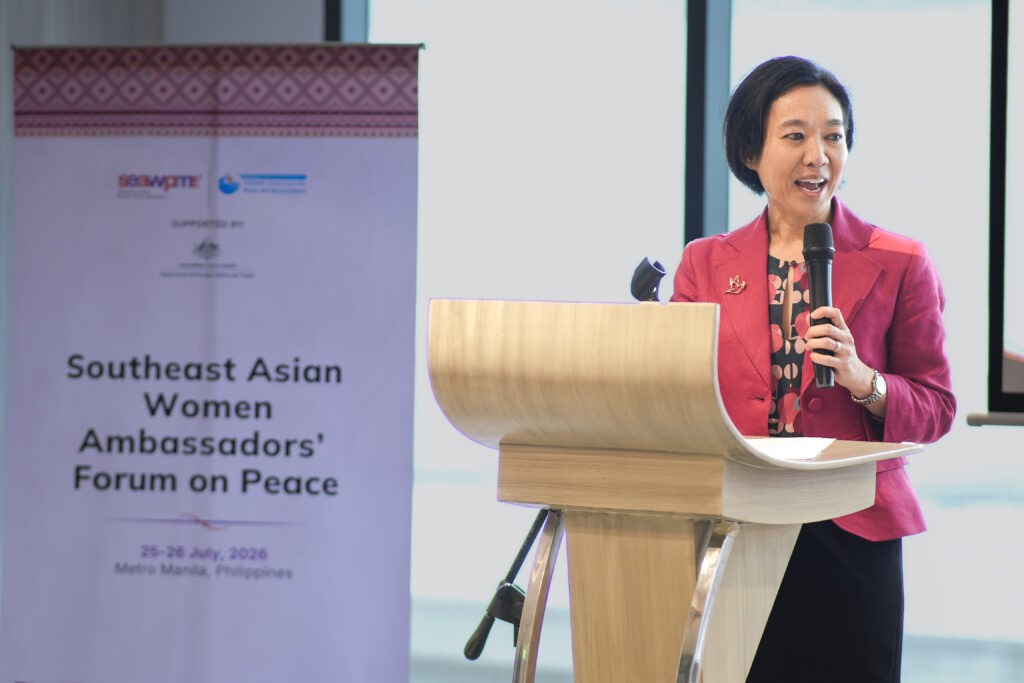
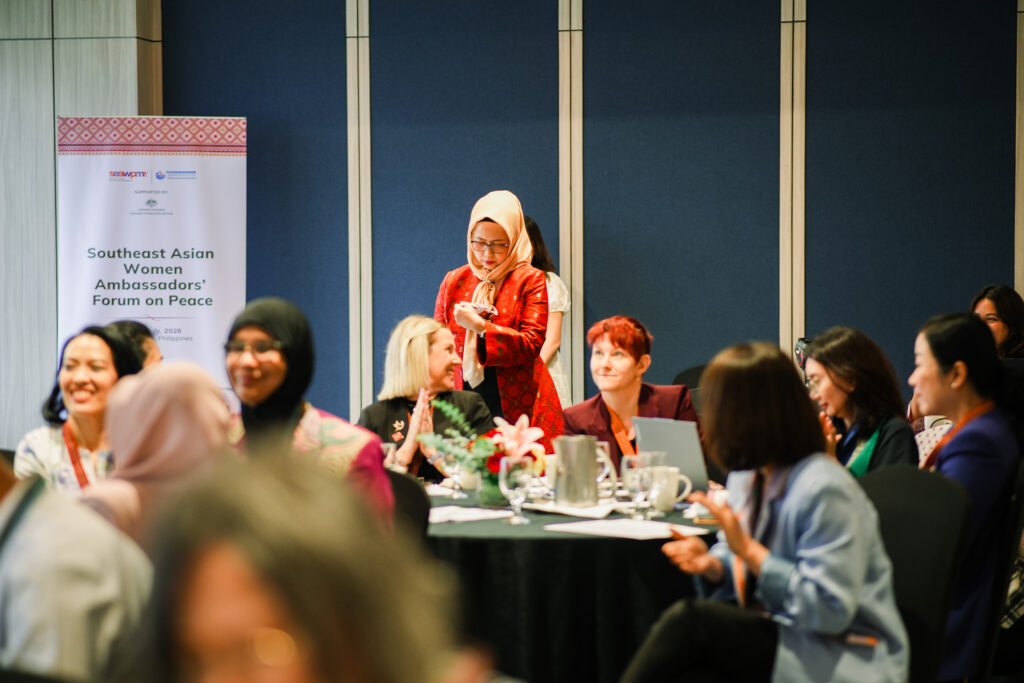
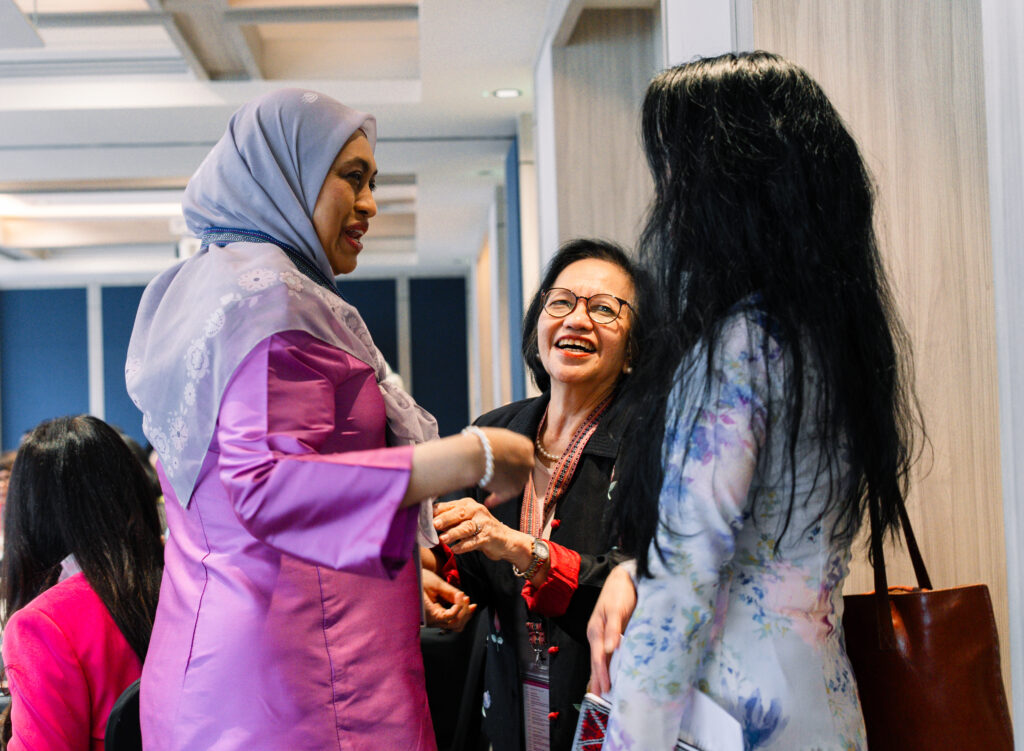
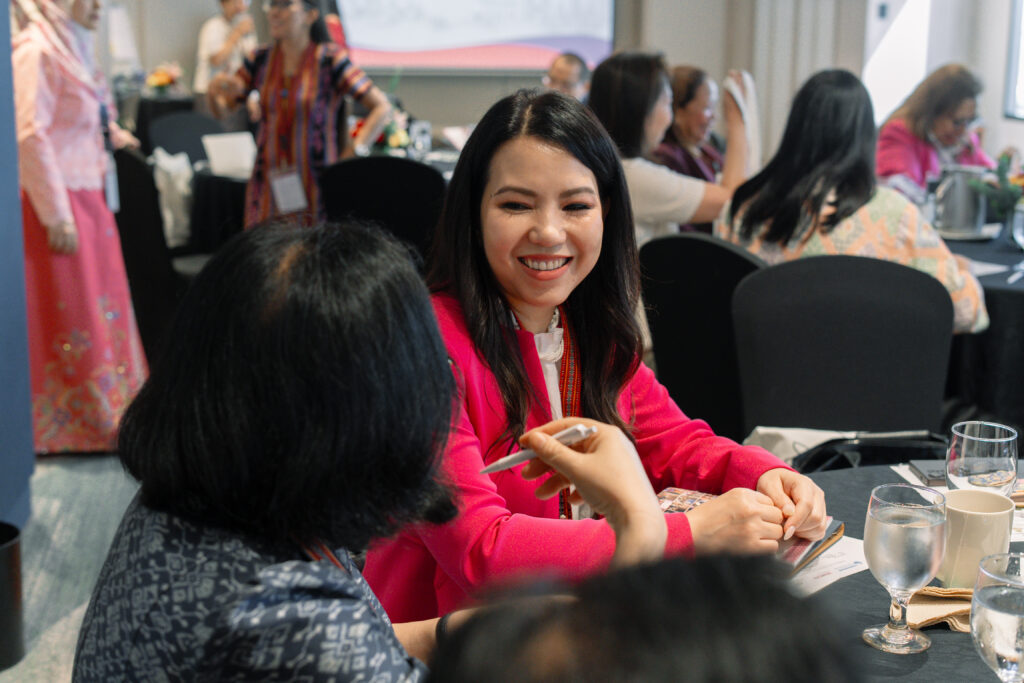
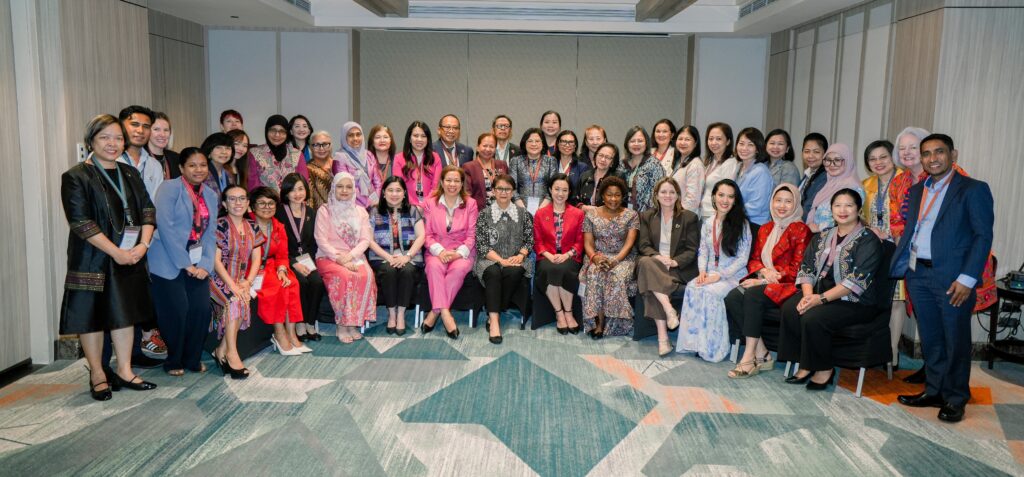
This idea echoed throughout the third Southeast Asian Women Ambassadors’ Forum on Peace, held in Manila, Philippines, on 25 and 26 July 2026. Convened by the Southeast Asian Women Peace Mediators (SEAWPM) in partnership with the ASEAN Institute for Peace and Reconciliation (ASEAN-IPR), with support from the Australian Department of Foreign Affairs and Trade (DFAT), the Forum brought together around 50 women ambassadors, senior diplomatic officials and peace practitioners from Southeast Asia and beyond.
This year’s theme, Narratives in Conflict Prevention, De-escalation and Transformation, recognises that conflict is shaped not only by political decisions and military developments, but also by the stories societies tell about themselves and each other, through language, imagery, framing, recognition, and even silence.
Over two days, the Forum explored how narratives influence diplomacy, political space and public trust across a range of conflict contexts. From women’s leadership and preventive diplomacy to Palestine, Myanmar, the Thailand-Cambodia border tensions, Timor-Leste’s reconciliation journey and water diplomacy, every session returned to the same question: how do narratives shape the conditions for conflict, dialogue, and peace?
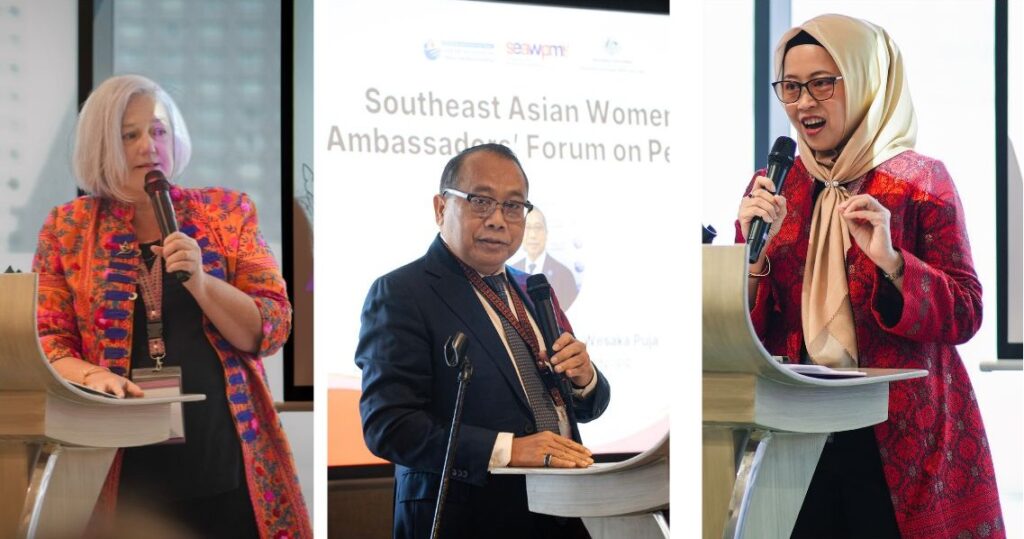
The Forum opened with a discussion on how diplomacy itself is evolving. In an increasingly fragmented environment, participants reflected that diplomacy can no longer be understood only through negotiations, formal agreements or official statements. Relationships, public discourse and collective memory have become equally important. As one speaker reflected,
“Diplomacy is not only about positions and processes. It’s also about the narratives that shape trust, legitimacy and possibility.”
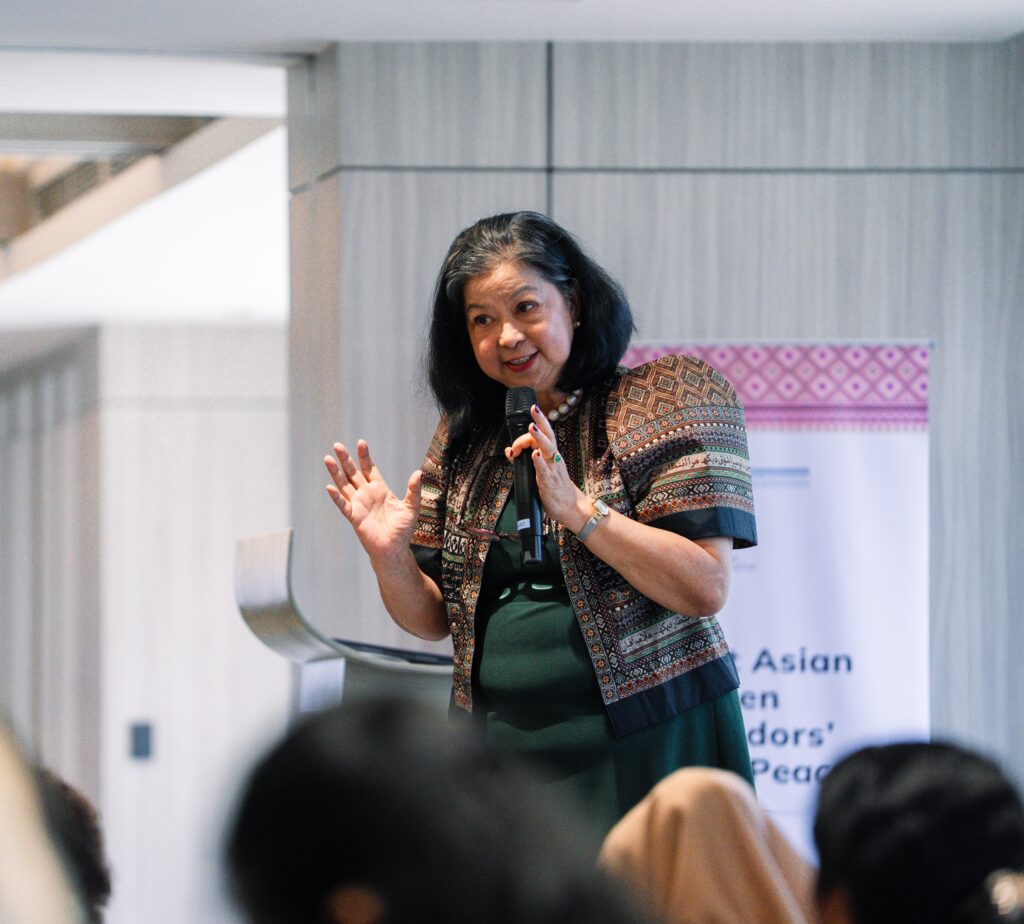
Drawing from decades of negotiating within ASEAN, one speaker recalled spending three months making the same proposal around the negotiating table, only to see it accepted immediately when a male colleague presented the very same argument. The story prompted a simple but pointed question: “We have a place at the table, but do we get the same share?” Her story challenged participants to look beyond representation and ask who actually shapes decisions, influences institutions and defines regional priorities.
The discussions also served as a reminder that much of diplomacy’s most meaningful work often goes unseen. Reflecting on decades of regional engagement, one participant remarked that “One of the most underrated things about diplomacy is that we never give credit to what did not happen.” Preventing escalation, maintaining relationships and preserving channels of communication rarely make headlines, yet these quiet efforts often determine whether conflicts escalate or dialogue survives.
As the conversations deepened, participants explored how narratives can also become instruments of exclusion.
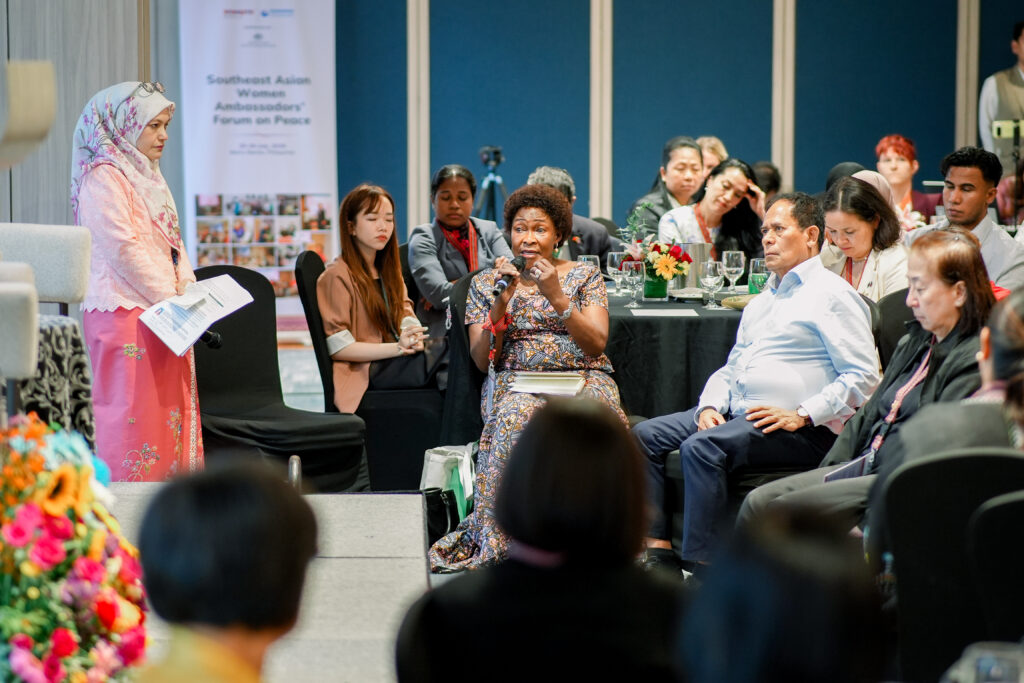
The Forum also widened the conversation beyond Southeast Asia through a reflection on Uganda and the legacy of the Lord’s Resistance Army. One speaker, drawing on firsthand experience negotiating with the LRA, described how the narrative of who could credibly broker peace shifted only once mediation moved beyond formal talks and capitals. “It meant getting down onto the ground, putting away my shoes and becoming one of them,” the speaker recalled, describing what it took to build trust with communities who had every reason to distrust outsiders. That shift in approach, from negotiating at a distance to negotiating from within, reframed peace not as something delivered from above but as something built alongside those who had lived through the conflict. The session was a reminder that trust, once broken, is rebuilt through presence more than process.
The discussion on Palestine challenged participants to examine how diplomatic language shapes public understanding of conflict and how repeated narratives can normalise violence. One speaker offered a metaphor that resonated throughout the Forum:
“Words are like water. When pure, they quench thirst and bring life. When polluted, they require treatment and purification.”
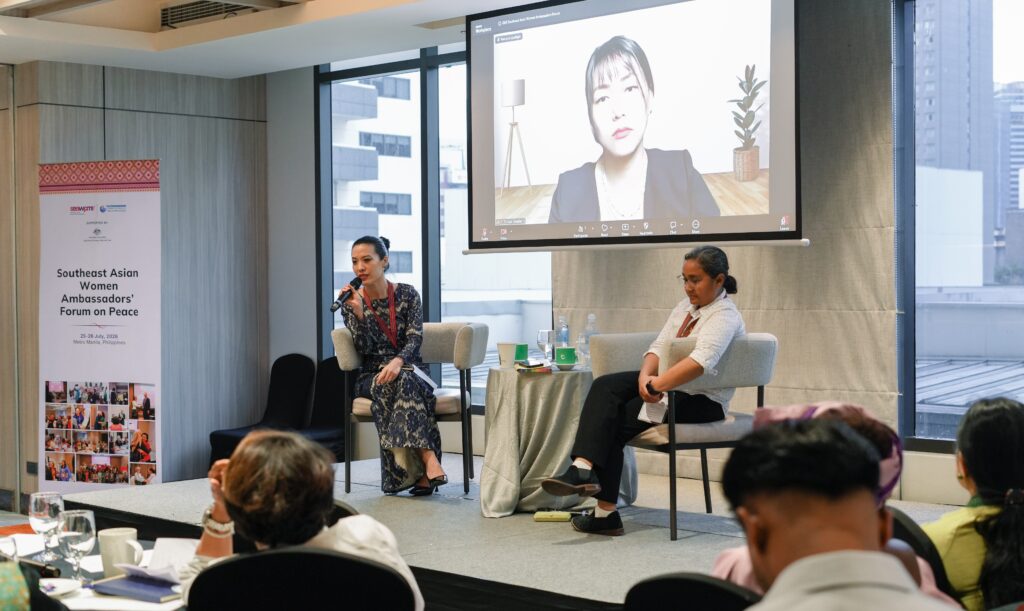
The Myanmar and Rohingya session shifted the conversation from diplomacy to belonging. Rather than focusing on a single moment of crisis, participants traced how exclusion is gradually built through citizenship laws, education systems, state institutions and public narratives that define who belongs and who does not. One speaker captured that reality through a deeply personal reflection:
“Our story has been told for many decades by others, not by us. There is a big difference between a story being told about people and a story being told by the people themselves.”
The session also grounded the discussion in broader regional conversations which underscored that the Rohingya’s statelessness is not accidental but the result of deliberate political choices, and that resolving it requires an equally deliberate political response.
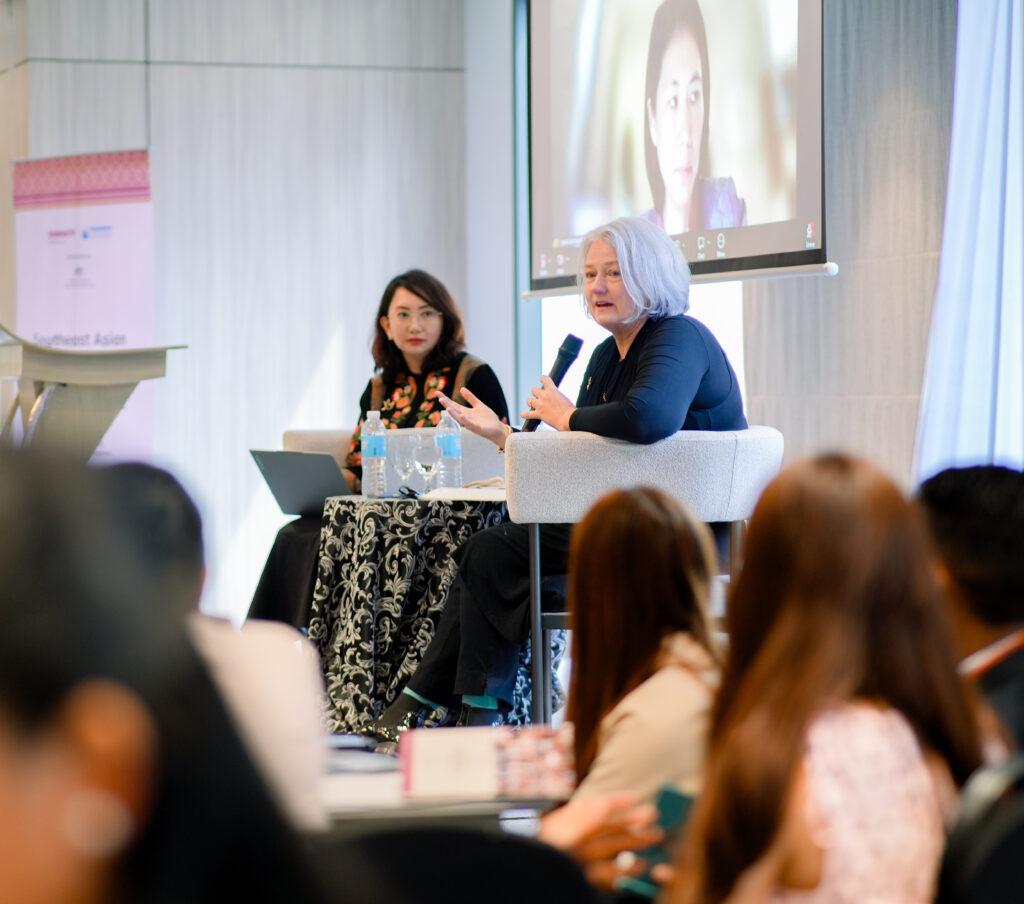
The discussion on the recent Thailand-Cambodia border situation explored how quickly competing narratives can reshape relationships built over decades. Speakers reflected on the role of media, political discourse and social media in reinforcing competing interpretations of the same events, while continuing to maintain communication across borders even as public spaces became more polarised. Rather than treating the crisis as a bilateral dispute alone, participants argued that it tested ASEAN’s wider relationships and resilience.
As one speaker reminded the Forum, “We each have to take responsibility. This isn’t just a Cambodia-Thailand issue, because what keeps us strong is the bond between all of us.” The conversation also acknowledged to remain in dialogue when tensions are high and positions are deeply held. Another participant encouraged the room to think differently about engagement:
“It requires courage, quiet courage, to be in tears in this space, it takes courage to sit here today, and to have this conversation with all of us.”
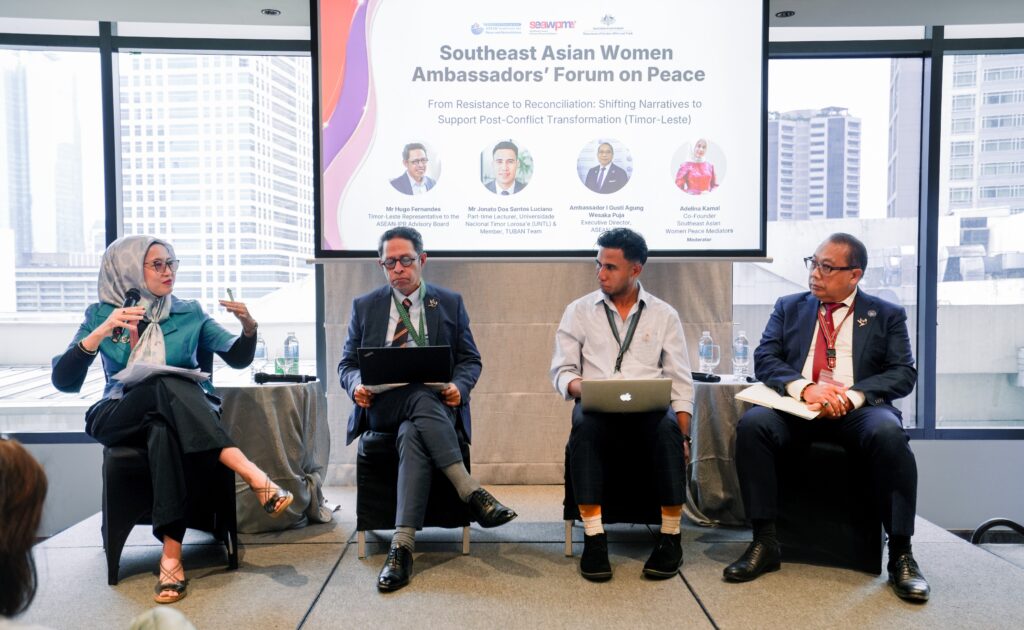
Timor-Leste’s reconciliation journey offered the Forum a rare and grounding example of how narratives can be used as instruments of repair. Reflecting on decades of reconciliation between Timor-Leste and Indonesia, participants described peace not as forgetting painful histories but as changing the relationship people have with those histories. One speaker reflected,
“We should not forget the past. But we also have to move on so that we do not become trapped by it.”
The discussion reiterated that reconciliation is not a single political moment but an ongoing process of truth-telling, education, institutional reform, and relationship-building that unfolds across generations. The Forum also challenged participants to broaden how peace itself is understood.
A session on water diplomacy demonstrated that issues often described as technical are, in reality, deeply political. Drawing on experiences from communities across the region, participants reflected on how access to water influences women’s participation, livelihoods, security and human dignity. “Conversations about water are also conversations about power, justice and peace.” The session broadened the Forum’s understanding of peace by showing how everyday issues such as access to water are inseparable from questions of equity, dignity, leadership and conflict prevention.
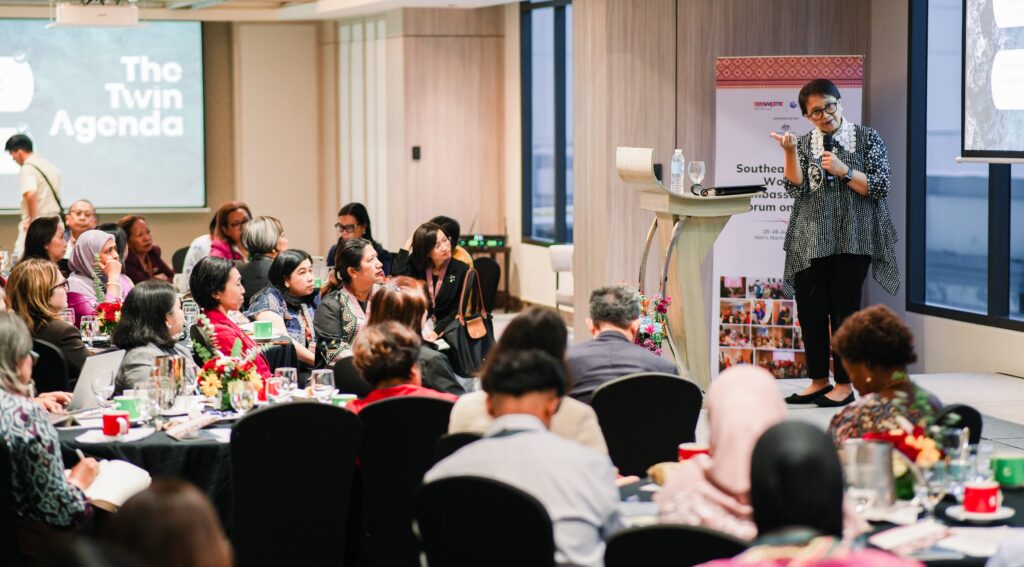
Rather than treating women, water and peace as separate agendas, participants showed how each strengthens the other. Women’s leadership is essential not only in mediation and negotiation, they argued, but also in shaping policies that shape the everyday conditions that make peace possible.
The Forum also marked the launch of the SEAWPM Five Years of Practice Learning Paper, which captures practical lessons from the network’s first five years of accompanying peace processes across Southeast Asia and beyond, reinforcing the value of relationship-building, reflection and regional solidarity. Beyond the discussions, the Forum strengthened a trusted regional space where women leaders exchange experiences, build relationships and deepen solidarity before crises emerge.
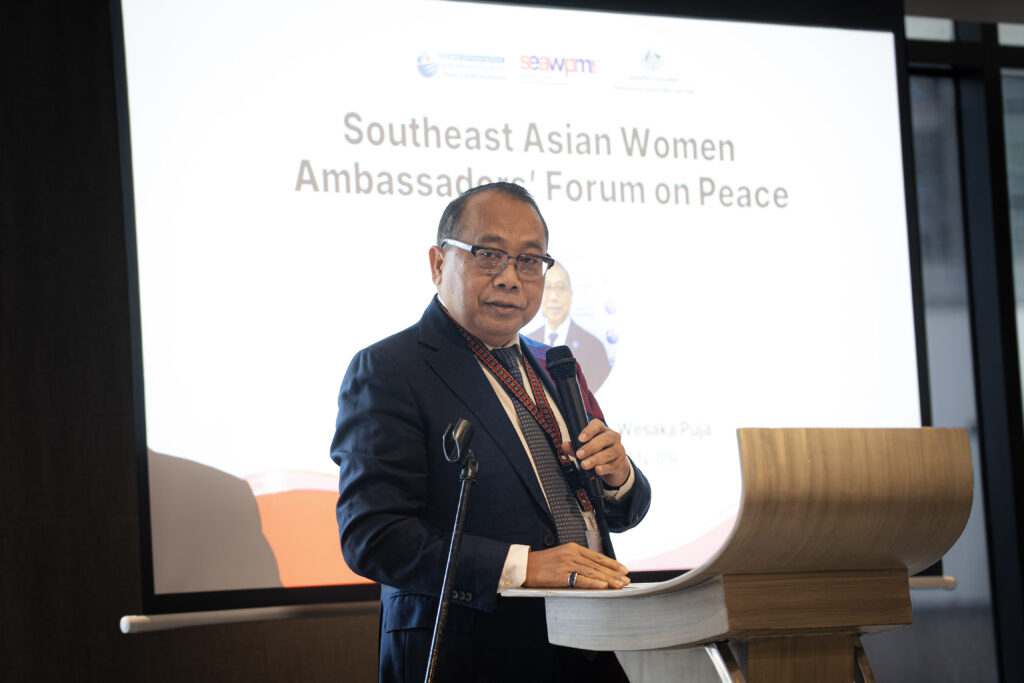
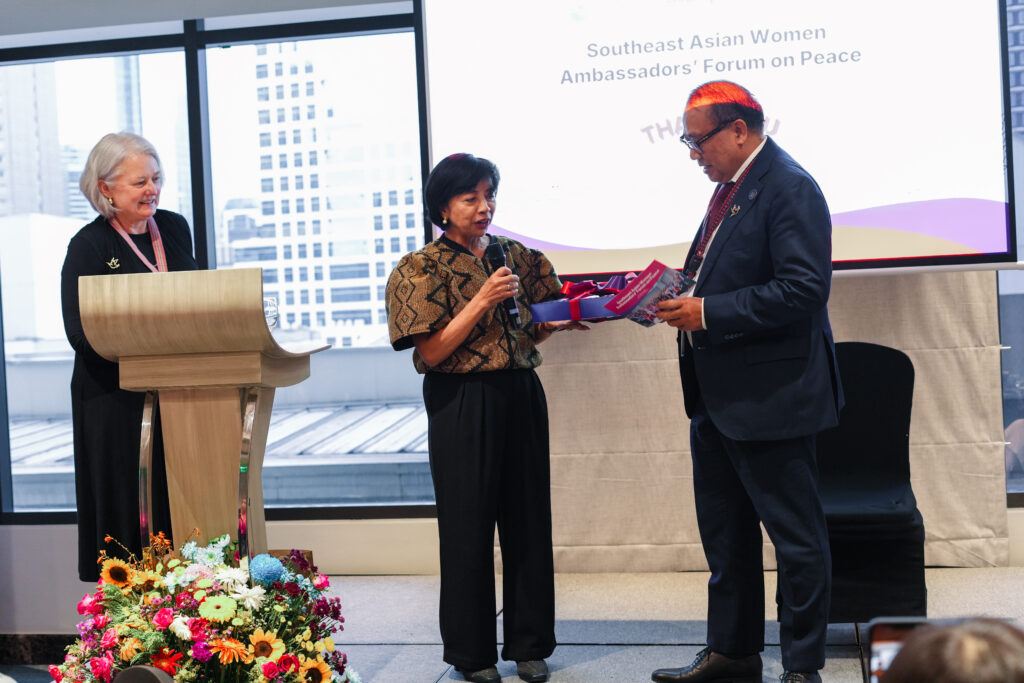
The Forum also marked a moment of transition, as participants celebrated the contributions of Ambassador I Gusti Agung Wesaka Puja over his tenure as Executive Director of the ASEAN Institute for Peace and Reconciliation. Over the past three years, the partnership between SEAWPM and ASEAN-IPR has helped create and sustain the Ambassadors’ Forum as a trusted space for women leaders to exchange experiences, strengthen regional relationships and advance practical learning for peace.
Across two days, the Forum explored conflicts that differed in history, geography and political context, yet a common thread ran through every conversation. Peace is not built only at negotiating tables or through political agreements. It is built in the stories societies tell about themselves and each other, in the histories they choose to remember, the voices they choose to elevate and the futures they are willing to imagine together. As one speaker reflected, “Lasting peace begins not only with agreements, but with the stories that make those agreements possible.” At a time when narratives increasingly shape public opinion, political decision-making and regional stability, the Forum underscored a simple but profound truth: the work of peace begins long before conflict erupts and continues long after agreements are signed. It begins with the narratives that create the conditions for trust, dialogue and the political courage to choose peace.