

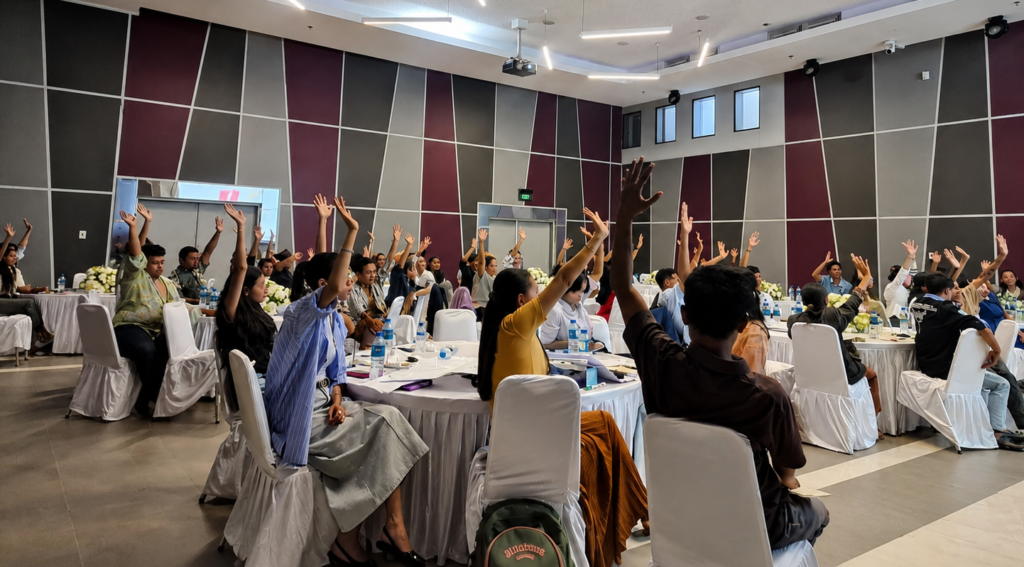
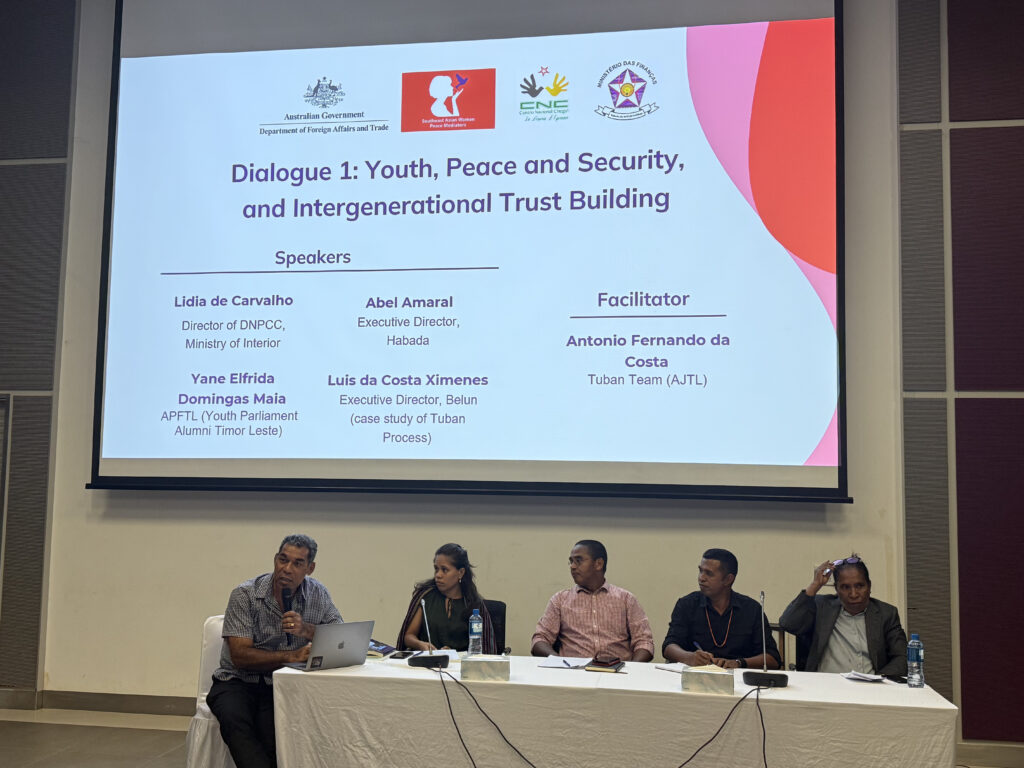
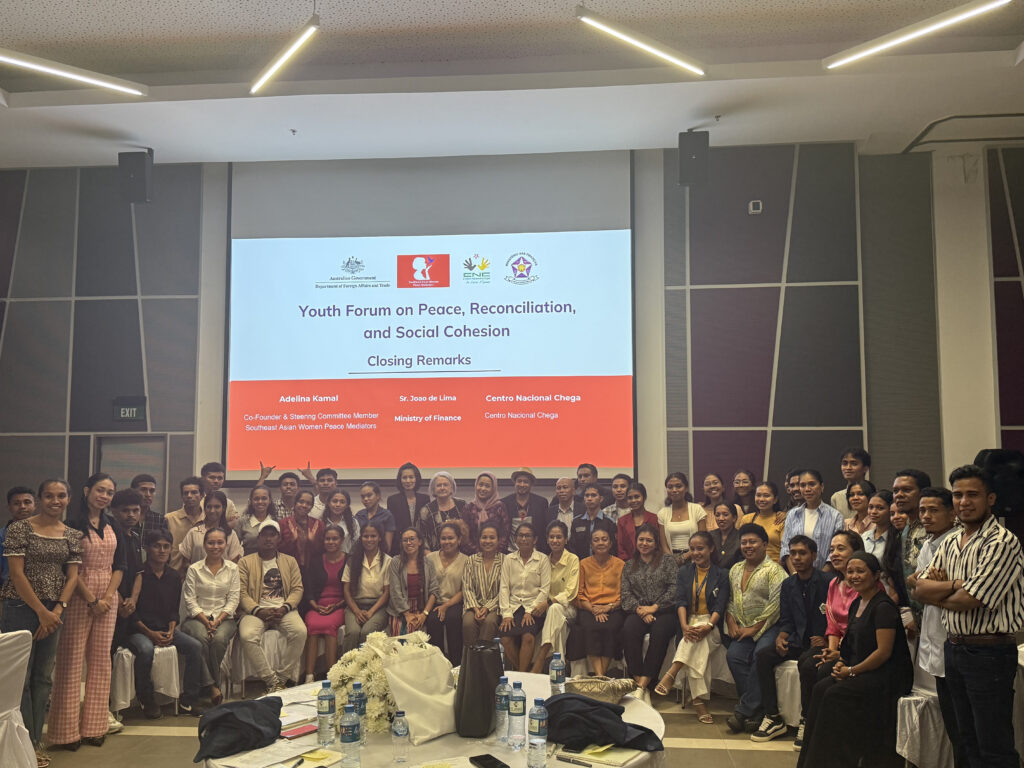
On 8 and 9 April, SEAWPM convened the Youth Forum on Peace, Reconciliation, and Social Cohesion in Dili, Timor-Leste, in close partnership with the Centro Nacional Chega! (CNC) and hosted at the Ministry of Finance. For the first time in Timor-Leste, young people were given a formal space in reconciliation dialogue as participants with a direct voice in shaping the country’s peace agenda.
The forum brought together youth leaders, civil society organisations, student associations, women leaders, community representatives, social movements, and development stakeholders, who brought a shared commitment to peace, reconciliation, and social cohesion in Timor-Leste.
“I am deeply encouraged to witness today’s young generation demonstrating a strong commitment to confronting injustice and advocating for inclusive and responsible policies that protect all people. This nation was founded through the sacrifice, resilience and determination of youth as the frontline, and it is essential to see that opportunities, trust, power and leadership spaces will be returning to young people so they can actively participate in shaping a resilient and strong, dignified nation.”
– Leonésia Tecla da Silva, Co-Founder, SEAWPM
Since 2023, SEAWPM has facilitated the Tuban Process, a cross-border dialogue initiative that brings together Timorese stakeholders from both sides of the border. Through that process, a clear gap emerged: young Timorese carry the weight of their country’s history, yet peace education has not reached them systematically, and they remain largely excluded from formal reconciliation mechanisms. This forum was SEAWPM’s direct response to that gap. It was built on the Tuban Process,on dialogues held in Dili, and engagement with stakeholders in Indonesia to create the first structured space for youth to engage with Timor-Leste’s reconciliation agenda.
“Young people are bridging historical divisions and building new alliances across communities that were once separated by decades of conflict.”
– A young peace leader from Myanmar, speaking at the forum
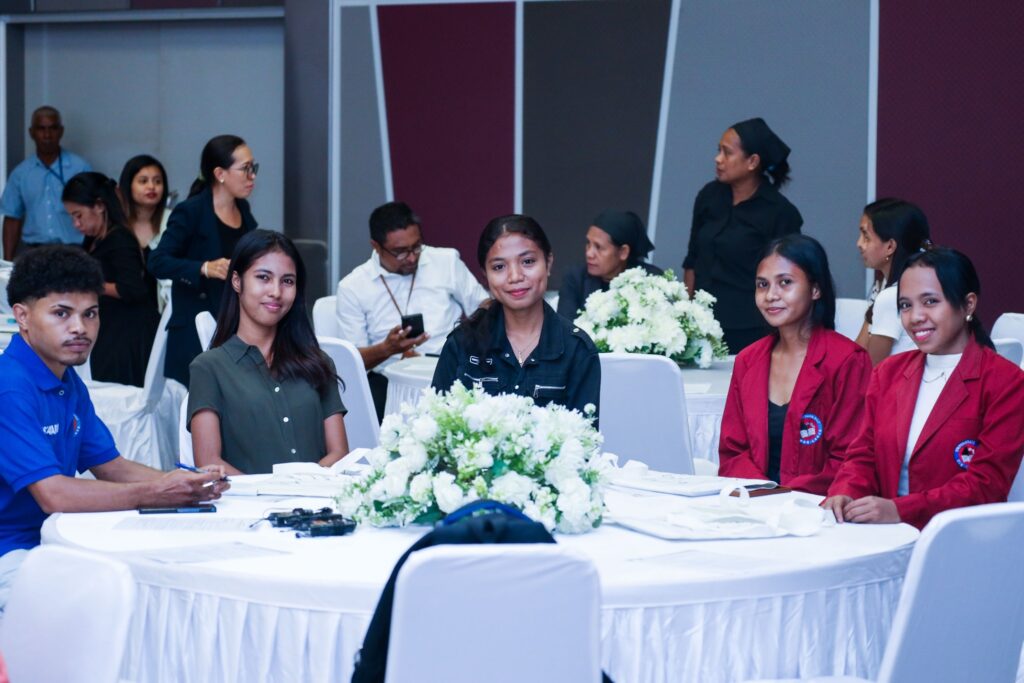
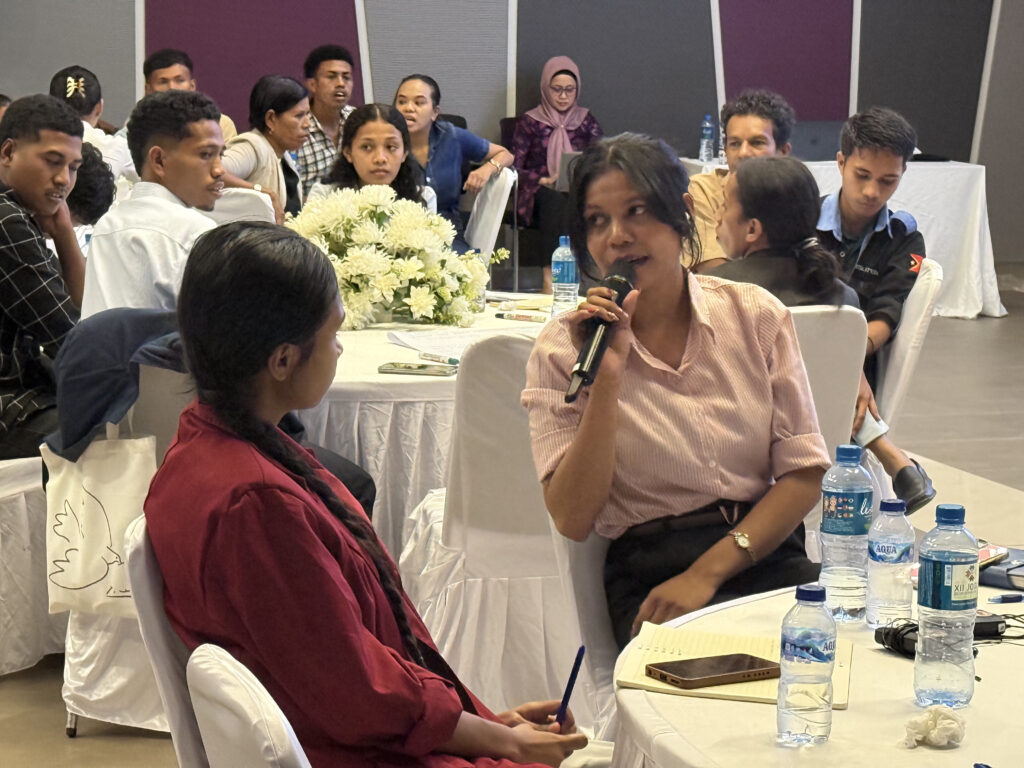
Youth participants raised the gap between national policy and the realities young people face. They called for long-term vision, for genuine understanding of what young people face today, and for public policy that reflects those realities. Specific concerns were also raised about the Magna Carta process and the economic pressures that drive young people out of civic life and into the labour force early. Research presented at the forum confirmed that these issues are documented realities, not perceptions. Representatives from the Ministry of Interior acknowledged the concerns, recognised the value of the open exchange, and committed to working with young people to address them.
“The Ministry of Interior has led the conflict prevention mechanism in Timor Leste where youth has been partners and allies for inclusive dialogue in the community, including enhancing the role of women mediators in conflict resolution schemes.”
– Carmen Ribeiro de Jesus, National Directorate of Community Conflict Prevention, Ministry of Interior
The forum extended beyond Timor-Leste’s borders, bringing together peace leaders from Myanmar, Aceh, and Deep South Thailand alongside Timorese participants in cross-regional solidarity. What emerged was a conversation shaped by people who have lived these questions, not just studied them.
A young peace leader from Myanmar reminded participants that rights are not entitlements granted by the state. They are struggled for, defended, and continuously reimagined by people. In contexts of conflict and repression, the fight for rights is also a fight to reimagine political life itself: who has power, who is protected, and what kind of future people want to build.
From Timor-Leste’s own experience, participants were reminded that memory can both sustain and fracture a community. Reconciliation does not mean leaving the past behind. It means transforming it into recognition, healing and the basis for renewed relationships.
The forum deepened the conversation on what solidarity demands in practice. The CNC offered a simple but powerful framing: solidarity combines ‘solid’ and ‘dare.’ It means standing firmly with others and having the courage to act — through amplifying voices, countering misinformation, enabling humanitarian action, and pressing for accountability.
“Solidarity is not passive. It is an active choice to stand with others. It becomes transformative when we dare to act together – across borders, movements and histories.”
– Adelina Kamal, Co-Founder, SEAWPM
Participants pointed toward what they called a movement of movements — linking struggles across communities, countries and regions without assuming that one context can provide a ready-made solution for another. Solidarity across contexts needs to be grounded in mutual understanding and respect for difference, not in uniform approaches.
The room held very different stories. But what connected them was not a shared solution, it was a shared refusal to give up, enough to move from conversation into commitment.
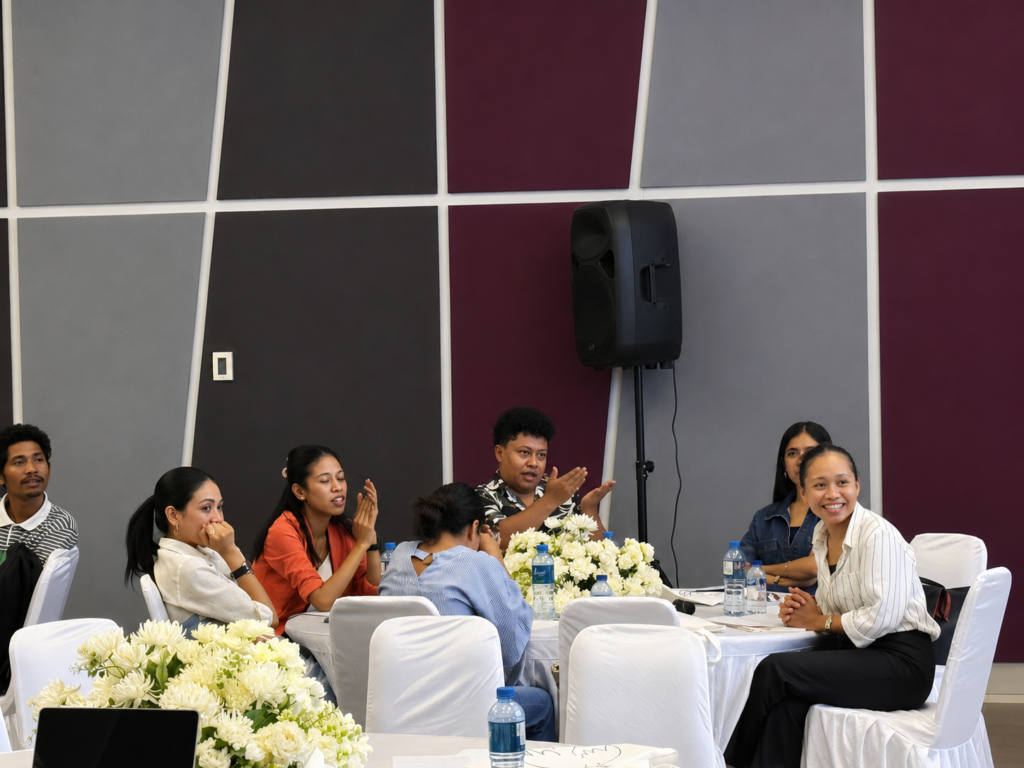
“Young people have a particularly important role to play because they bring new language, new imagination and new courage into peace and justice work. They can challenge inherited divisions, question old narratives and build new forms of connection across generations and borders.”
– Adelina Kamal, Co-Founder, SEAWPM
From Dialogue to Commitment: The Dili Resolution
On 9 April 2026, participants adopted a Resolution as a collective commitment to peace and reconciliation in Timor-Leste. Grounded in the recommendations of the Commission for Reception, Truth and Reconciliation in East Timor (Chega!) and aligned with UNSCR 2250 on Youth, Peace and Security and UNSCR 1325 on Women, Peace and Security, the Resolution outlines eight commitments:
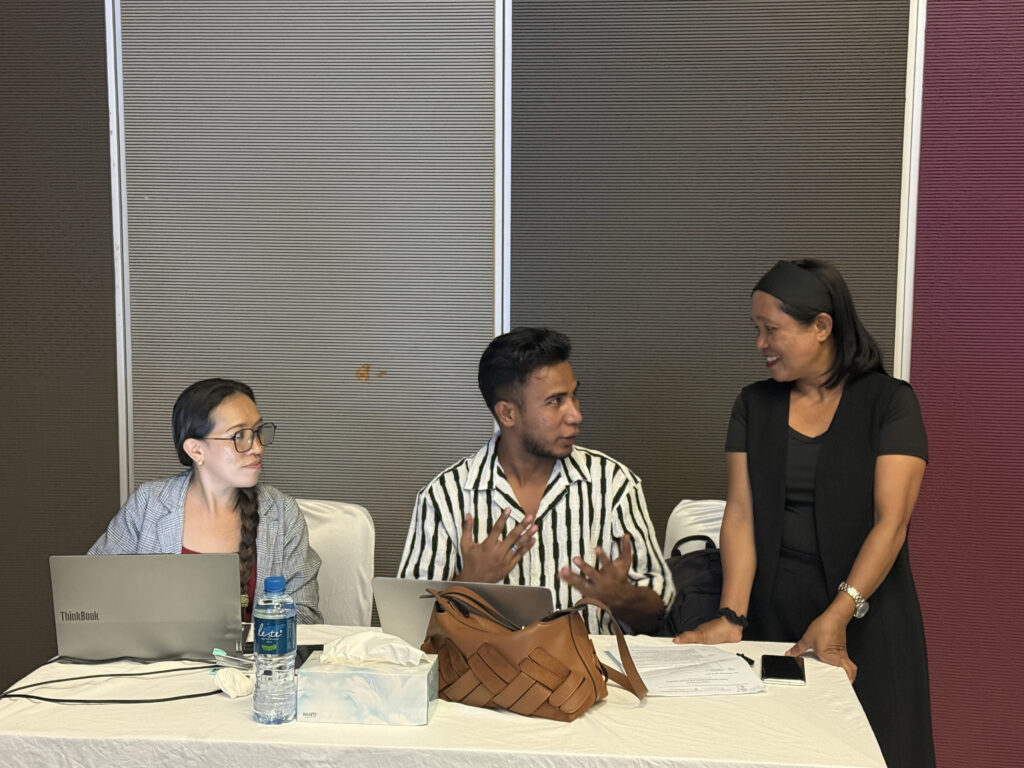
01 Peacebuilding
Promote dialogue in communities, schools, and public spaces. Reject violence, hate speech, and discrimination. Extend solidarity to communities still living under oppression and violence.
02 Reconciliation in the Spirit of Chega!
Support intergenerational dialogue between youth, veterans, elders, and survivors. Preserve historical memory. Establish a youth-led historical tourism museum under the guidance of CNC.
03 Historical Memory and Civic Education
Integrate peace and historical education into formal and non-formal learning systems. Recognise memory as part of national identity and unity.
04 Social Cohesion
Strengthen solidarity across municipalities and communities. Promote inclusion regardless of gender, ethnicity, religion, disability, political background, or social condition.
05 Youth Leadership and Participation
Expand youth representation in decision-making, including 35% youth representation in the National Parliament. Create sustained platforms for youth participation in national dialogue.
06 Women and Peace Leadership
Promote gender-inclusive leadership in peace processes. Support women mediators and young women peace leaders in line with UNSCR 1325.
07 Community Action
Run local peace and reconciliation dialogues in municipalities. Launch awareness campaigns in schools and universities. Support social media campaigns promoting unity, responsible citizenship, and anti-violence messages.
08 Institutional Recommendations
Integrate peace education into national curricula. Strengthen community-based reconciliation mechanisms in line with Chega! Invest in youth-led conflict prevention programmes.
“Through our commitment to UNSCR 2250 and Timor-Leste’s National Action Plan on Youth, we recognise the roles of youth in maintaining local peace efforts and international peace and security.”
– Damascena Domin Pereira de Oliveira, Associacaon Chega! Ba Ita
The Resolution calls on the government to guarantee a Youth Marker in the annual state budget (OGE) and to invest in cross-border historical infrastructure between Timor-Leste and Indonesia as a symbol of peace, led by youth under the guidance of CNC.
The Resolution adopted in Dili is a collective mandate. SEAWPM stands with its participants as they carry it forward. The policy recommendations will be shared with relevant government bodies, the Centro Nacional Chega!, and regional partners in the continued pursuit of sustainable peace in Timor-Leste and across the region. SEAWPM is grateful to all participants, partners, and institutions whose engagement made this forum possible.
